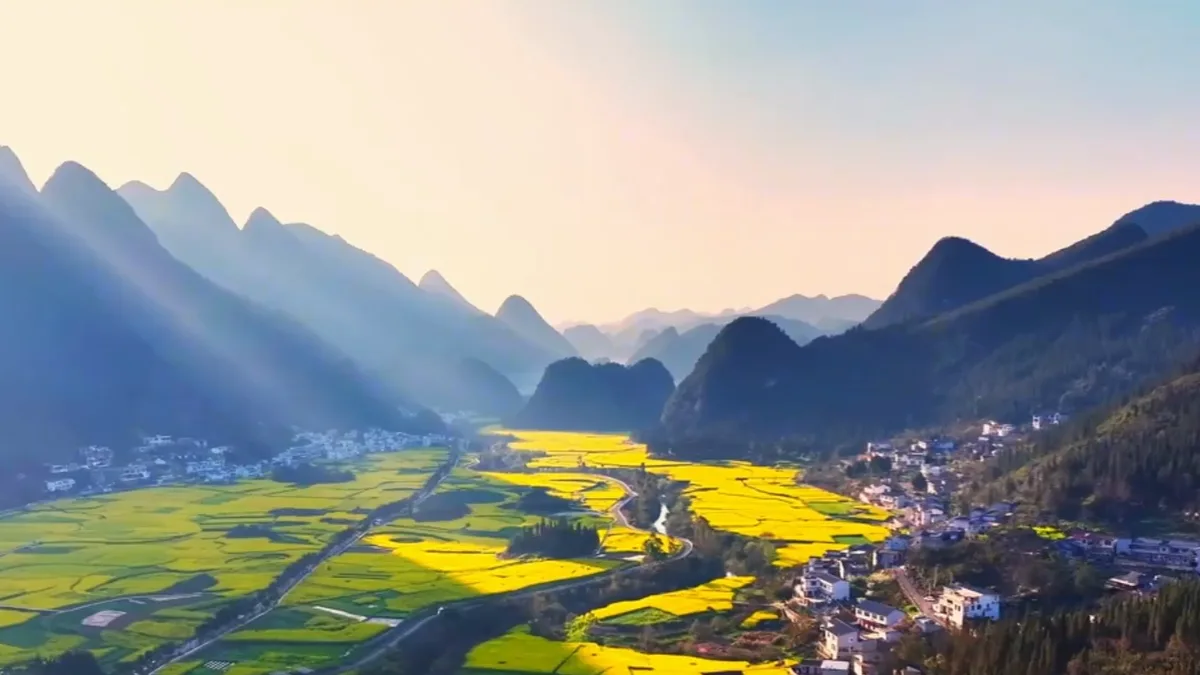
Southwest China, beyond the first-timer route
Guizhou Travel Guide: Places, Routes & Practical Tips
Plan a Guizhou trip around Huangguoshu Waterfall, Xijiang Miao Village and Zhijin Cave. Compare 3 to 10 day routes, travel times and local transfers.
Source footage provided for Chinista editorial use.
Why Guizhou
Explore limestone mountains and village communities.
Guizhou has limestone mountains, waterfalls, caves and forests of karst peaks, alongside Miao, Dong, Bouyei and Tunpu communities. Compared with Yunnan, its routes focus more closely on these landscapes and village visits. Compared with Guilin, the sights are spread across a larger province and take more time to reach. Choose one part of Guizhou and leave room to explore it slowly.
Before you choose
Is Guizhou right for this trip?
Come for waterfalls, karst scenery, mountain walks and regional food. You will spend less of the trip in transit if you stay within one part of the province and allow enough time for the distances between places. Trying to see every famous stop makes for a rushed trip.
- Best for
- Landscape, regional food and travelers comfortable with multi-leg transport
- Not ideal for
- A two-day side trip or a route built around famous cities only
- Editorial basis
- Source-researched with editor-supplied images and credited Creative Commons reference images
Eight places to start
Best places in Guizhou: Huangguoshu, Xijiang and beyond.
Choose one or two main stops, then check the transport, season and time needed before adding nearby places.
All place images: Source footage provided for Chinista editorial use. 01
01Northeast Guizhou
Fanjingshan
A World Heritage mountain with steep, narrow paths and views that depend on the weather. Official 2026 reporting gives a daily admission cap of 9,000, with advance reservations required. Secure a booking before setting off, especially at busy times.
- How to get there
- Use Tongren or Tongren South as the rail gateway, then arrange the road transfer toward Jiangkou and the scenic-area entrance. Confirm the exact entrance and cable-car plan before leaving.
- Best time
- Choose a spring or autumn weekday if crowds matter most. Summer is a popular cool-weather escape, while cloud, wind and rain can remove the summit view in any season.
- How long
- One full day after reaching the area. Stay nearby if the mountain is the main reason for your trip.
 02
02West of Guiyang
Huangguoshu Waterfall
Huangguoshu fits easily into a western Guizhou route. Travel to the Anshun area, then allow time for the road transfer and for walking around the larger scenic zone.
- How to get there
- Reach Anshun by rail, then use the current scenic shuttle, bus or booked road transfer. The waterfall is not beside Anshun railway station.
- Best time
- Higher water can make the falls more dramatic, while major holidays make the paths and shuttles much busier. Check rainfall and crowd notices together.
- How long
- One full day to see the wider scenic area.
 03
03Southeast Guizhou
Libo Xiaoqikong
Forest paths and bridges connect bright pools in this water-and-karst landscape. High-speed trains serve Libo, but you still need a local transfer from the station to Xiaoqikong.
- How to get there
- Take high-speed rail to Libo, then continue by the current local shuttle, bus or road transfer to Xiaoqikong. Save the Chinese entrance name because the county and scenic area are separate stops.
- Best time
- Green, wet months strengthen the water landscape but bring rain and crowds; use the live forecast and avoid building the whole route around one dry-weather walk.
- How long
- One full day, plus a night in Libo when it anchors the southeast branch.
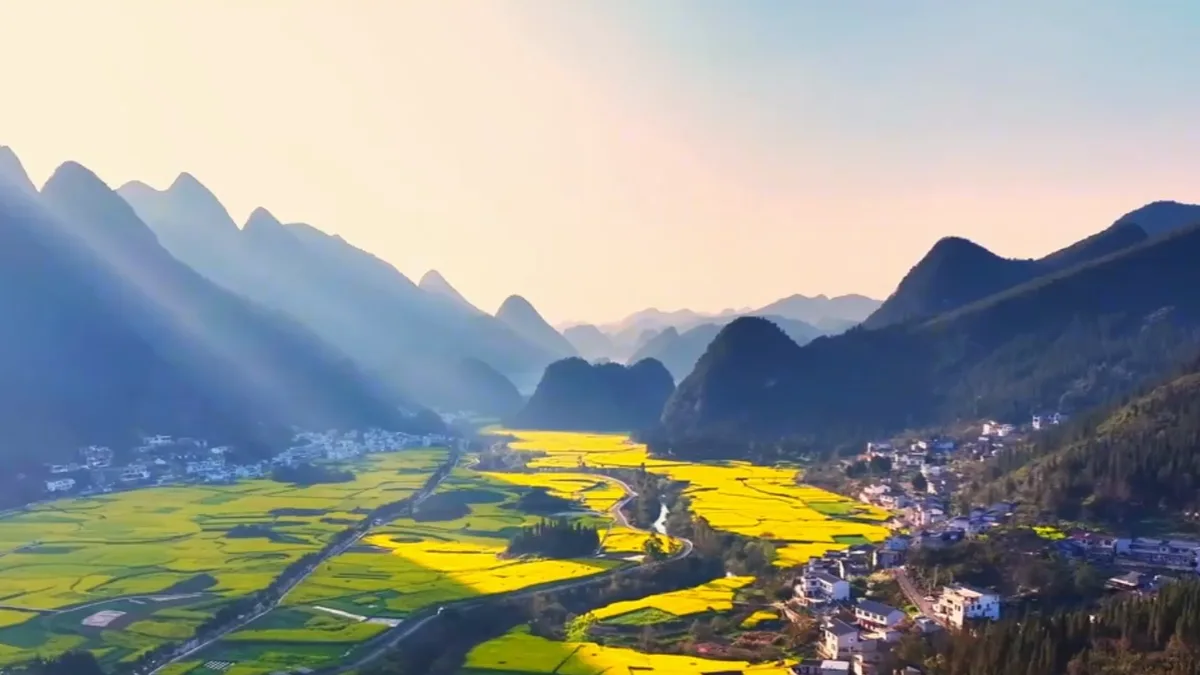 04
04Southwest Guizhou
Wanfenglin
Limestone peaks rise above farmland near Xingyi. The journey from Guiyang is long enough to warrant staying in the area; an out-and-back day would be tiring.
- How to get there
- Stay in Xingyi and take local road transport to the Wanfenglin entrance. Allow for the journey from Guiyang separately from sightseeing time.
- Best time
- Spring fields and the May to October outdoor season are popular. Check local visibility and heat before choosing a day for the viewpoints.
- How long
- Half to one day, with at least two nights in Xingyi if paired with Malinghe Canyon.
 05
05East Guizhou
Zhenyuan Ancient Town
Stay overnight for an evening and early-morning walk along the Wuyang River, which separates the historic government and fortification towns. A brief daytime stop gives you less time to enjoy the riverside.
- How to get there
- Arrive through Zhenyuan railway station, then take local transport to the old town and confirm the exact hotel entrance before dark.
- Best time
- A dry, mild weekday is easier for walking; holiday evenings can be crowded and summer storms can affect riverside plans.
- How long
- One night, allowing an evening and an early-morning walk.
 06
06Southeast Guizhou
Xijiang Miao Village
Wooden houses cover the hillsides in a settlement with extensive visitor facilities. Expect shops and crowds alongside the landscape and local cultural life; Xijiang is a busy tourism destination.
- How to get there
- Use Kaili South as the usual high-speed-rail gateway, then continue by the current coach or a confirmed road transfer to the scenic entrance.
- Best time
- Visit outside national holidays and arrive early or stay overnight if you want quieter streets; festival dates require separate planning.
- How long
- Half a day for the main visitor area, or one night for a less rushed visit.
 07
07Southeast Guizhou
Jiabang Rice Terraces
Jiabang takes more transport planning than the other places on this list. Allow time for the mountain roads and check the weather and stage of the rice crop. Map distance alone will tell you little about the journey.
- How to get there
- Start from Congjiang county or another confirmed southeast base and pre-arrange the final mountain-road segment. Do not assume a direct railway-to-terrace connection.
- Best time
- Planting, green and harvest phases look different and shift with farm conditions; confirm the current field stage rather than booking from an old photo caption.
- How long
- One or two nights to allow for the road journey.
 08
08West Guizhou
Zhijin Cave
This UNESCO Global Geopark cave has large and varied karst deposits. It suits a western route with time for a substantial cave visit. The cave can be an alternative in poor weather, but expect sustained walking and steps.
- How to get there
- Reach Zhijin county by the current rail or road service, then continue to the cave entrance by local transport. Recheck the last return connection before entering.
- Best time
- The cave is an all-year option, but outside weather still affects the approach and onward transport.
- How long
- Half to one full day, depending on the transfer from Guiyang or Anshun.
6 deeper choices
Add a stop near your planned route.
Choose one of these if it fits the area you are visiting. Confirm any event or performance for the date you plan to go.
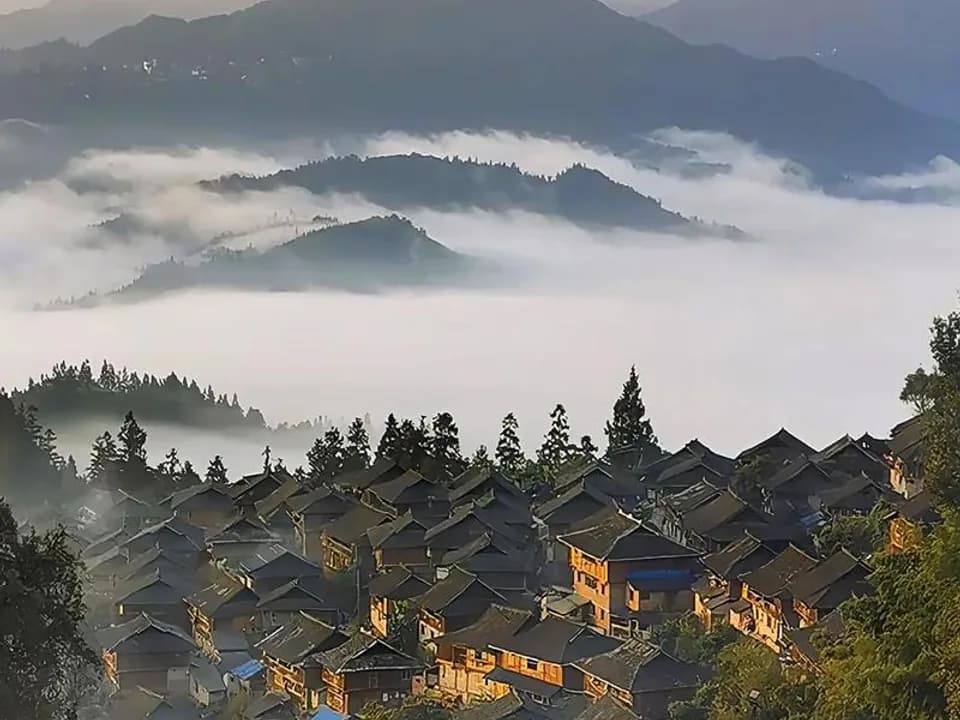
Near Congjiang, southeast Guizhou
Basha Miao Village
Basha is a Miao village known to visitors for its dress and performance traditions. People live here; approach the community respectfully and be wary of descriptions such as the often-repeated “last gunmen tribe” slogan.
- How to get there
- Use Congjiang as the rail gateway, then confirm a road transfer to Basha with the accommodation or current visitor channel.
- Best time
- Choose a confirmed performance or festival date if that is the reason for going; otherwise favor a mild-weather weekday.
- How long
- Three to five hours, or combine it with a night around Congjiang or Zhaoxing.

Liping County, southeast Guizhou
Zhaoxing Dong Village
One of China's largest Dong villages, with five drum towers, covered bridges and a strong connection to Dong Grand Song. It has visitor facilities and remains a residential community.
- How to get there
- Congjiang high-speed-rail station is about 5 kilometers away; use the current shuttle or a confirmed local transfer for the final leg.
- Best time
- Spring and autumn are comfortable for walking; festival and holiday dates need advance room and crowd checks.
- How long
- One night, with time in the late afternoon and the following morning.
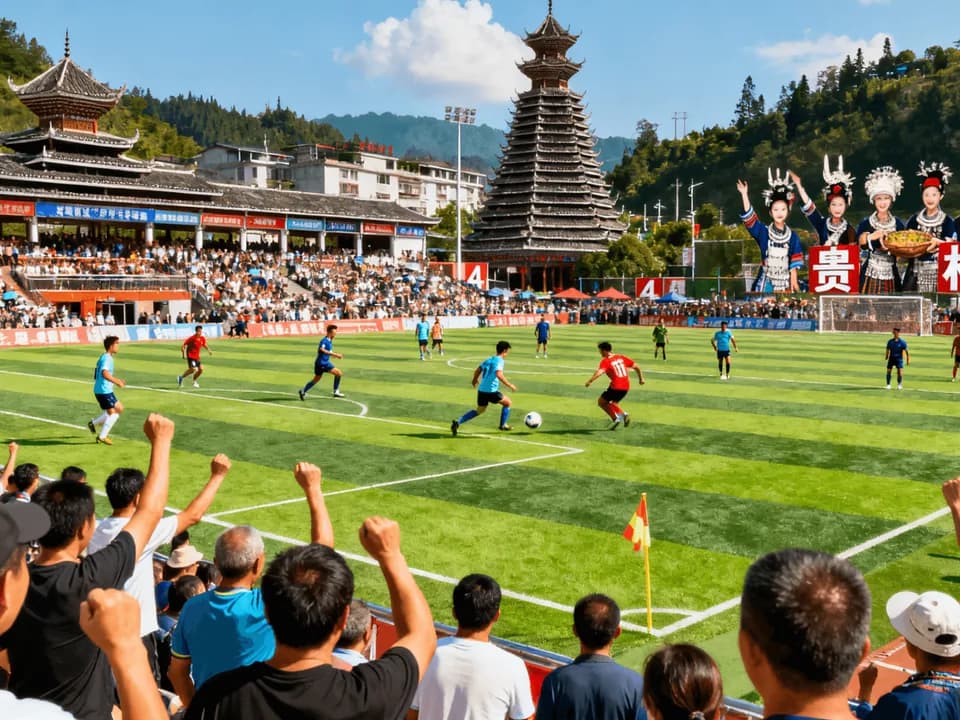
Rongjiang County, southeast Guizhou
Rongjiang Village Super League
Cun Chao brings village football teams, food stalls and cultural performances to Rongjiang on match days. Check the current fixture list: the event does not operate as a permanent attraction, and an old report cannot confirm your date.
- How to get there
- Arrive through Rongjiang railway station, then follow the current event notice for the stadium, entry arrangements and local traffic controls.
- Best time
- Only when the official match calendar confirms a fixture; check again after severe weather or schedule changes.
- How long
- One match day or an overnight stay if the fixture ends late.
Panzhou, west Guizhou
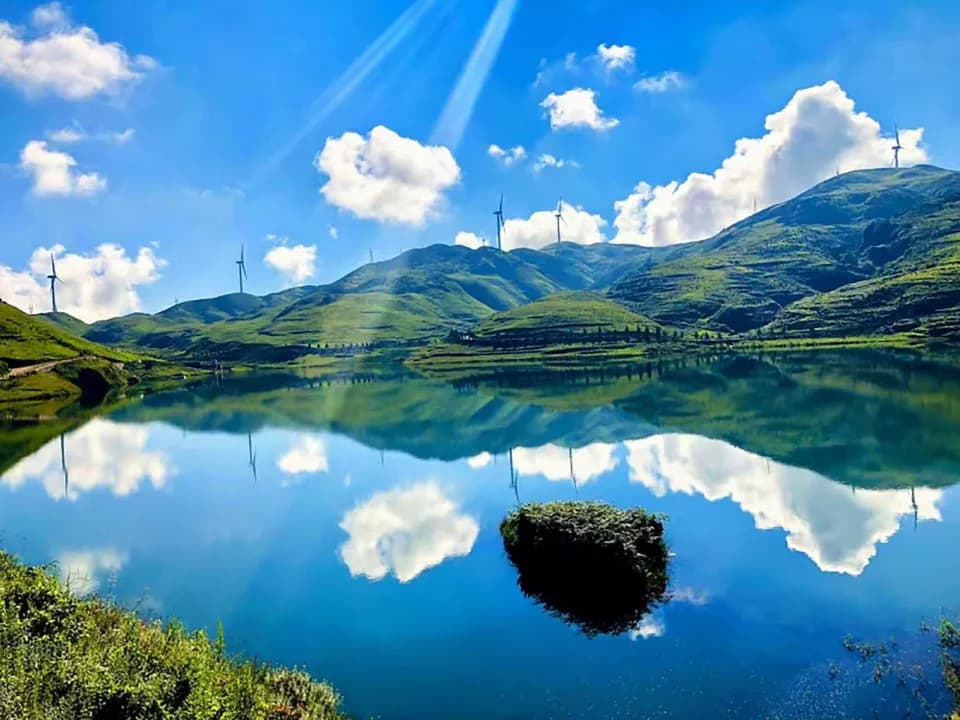
Wumeng Grassland
Wumeng has azaleas and open plateau in spring, cooler conditions in summer and sometimes snow in winter. Give Panzhou time of its own in the itinerary; it takes effort to add from Guiyang.
- How to get there
- Use Panzhou as the rail base, then confirm a road transfer and the correct scenic entrance. Do not assume Liupanshui city center is the final gateway.
- Best time
- Spring for azaleas, summer for cooler outdoor time, or winter only when current snow and road conditions support the trip.
- How long
- One full day after reaching Panzhou. Stay overnight to leave more room for delays.
Xingyi, southwest Guizhou
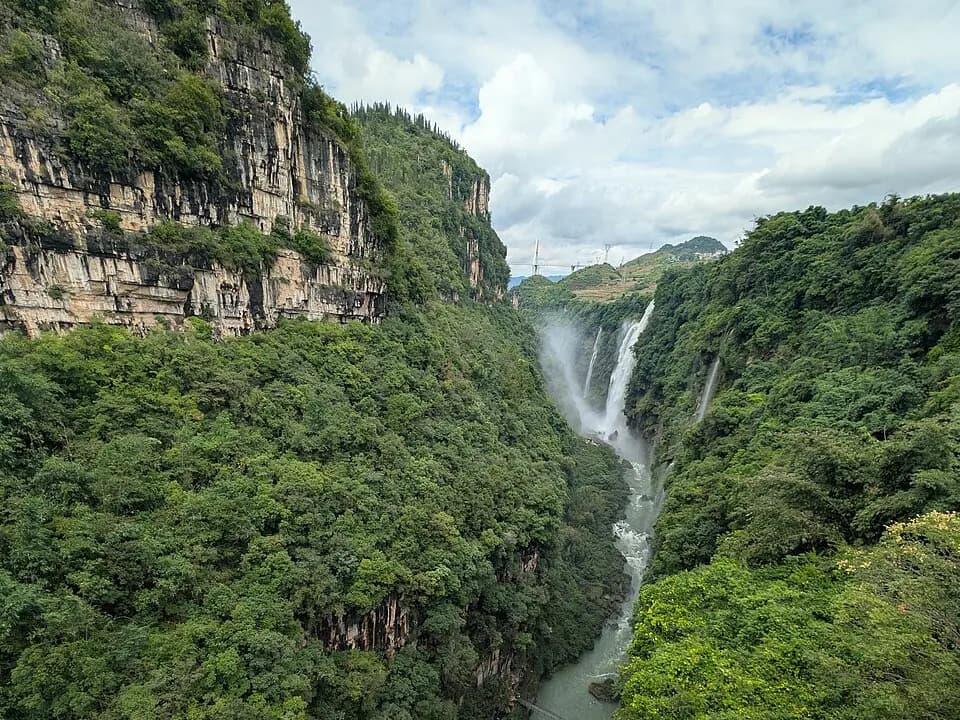
Malinghe River Canyon
Walk through a deep limestone canyon with waterfalls near Xingyi. It makes a more active outing alongside Wanfenglin's open views.
- How to get there
- Base in Xingyi and use local road transport to the confirmed scenic entrance. Do not schedule it on the same day as the long transfer from Guiyang.
- Best time
- The official provincial guide favors May to October; recheck rainfall, trail and rafting conditions for the exact day.
- How long
- Half to one full day, paired with at least two nights around Xingyi.
Between Guiyang and Anshun
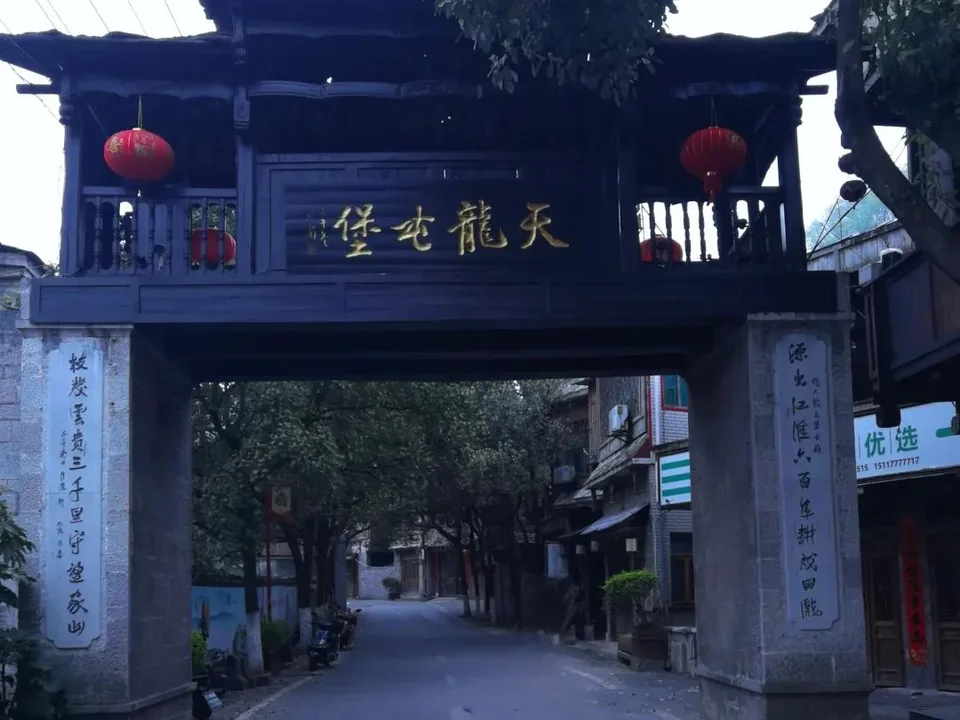
Tianlong Tunpu
Tianlong is a fortified village of Tunpu communities descended from Ming-era military settlers. Its architecture, clothing and Dixi traditions differ from those of the Miao and Dong villages farther east.
- How to get there
- Arrange road transport along the Guiyang, Anshun and Huangguoshu corridor. Plan the stop in advance; it is awkward to add as an unplanned rail detour.
- Best time
- Year-round, but confirm whether a Dixi performance or workshop is operating before building the visit around it.
- How long
- Two to four hours including the local road transfer.
Check before booking
Check the weather, crowds and travel time.
The right choice depends on your route and dates. Use these comparisons to decide whether a stop is worth the time it takes to reach.
Fanjingshan during peak periods
- Avoid when
- Avoid a fixed-date summit visit if you have no reservation, the forecast is poor or summer and holiday crowds would spoil the trip for you.
- Better move
- Reserve first, stay near the mountain and have an alternative for poor weather. For fewer crowds, choose a non-holiday weekday in spring or autumn; summer is not always comfortable.
- Recheck before you go
- Timed entry, the 9,000-person daily cap, cable-car operation and the exact entrance for your date.
Qingyan or Zhenyuan for an old-town stop?
- Avoid when
- Do not spend a long transfer on Qingyan if the real goal is an atmospheric overnight town; Qingyan makes more sense as a compact half-day near Guiyang.
- Better move
- Choose Zhenyuan if your eastbound route passes through it and you can stay for the riverside evening and early morning. Qingyan or Zhenyuan can suit different routes; neither is always the better choice.
- Recheck before you go
- Current attraction tickets inside either town, hotel vehicle access and the final train or road connection.
Longgong or Zhijin Cave?
- Avoid when
- Do not add Longgong simply because it is near Huangguoshu if another half-day transfer and a boat-led cave experience are not what you want.
- Better move
- Choose Zhijin Cave when scale and deposit variety justify a dedicated western stop. Keep Longgong only when its water-cave format and Anshun location fit the route better.
- Recheck before you go
- Walking requirements, boat or cave sections, last admission and the return transport for the exact day.
Choose the season for Wumeng Grassland
- Avoid when
- Do not book from a single green-meadow photograph. Fog, rain, cold and snow can completely change visibility, roads and the value of an exposed plateau day.
- Better move
- Choose spring for flowers, summer for a cooler landscape or winter for a cold-weather trip, and stay a night in Panzhou.
- Recheck before you go
- Weather, road conditions, scenic transport and any activity or seasonal closure before leaving Panzhou.
Leave enough time between places
- Avoid when
- Fanjingshan, Libo, Xingyi and Panzhou take time to combine, even when they look close on a province map. Train journeys still need local transfers at either end.
- Better move
- Keep to one part of the province and spend at least two nights in one base. Count the time from station to hotel to attraction entrance before adding another stop.
- Recheck before you go
- Train station names, hotel access, final transfers and the last return service for every day of the route.
Living culture
Find a host for a performance or workshop.
Confirm who is hosting, where it takes place and whether the maker or performers are available. Check photography rules before attending.
Zhaoxing and other Dong communities in southeast Guizhou
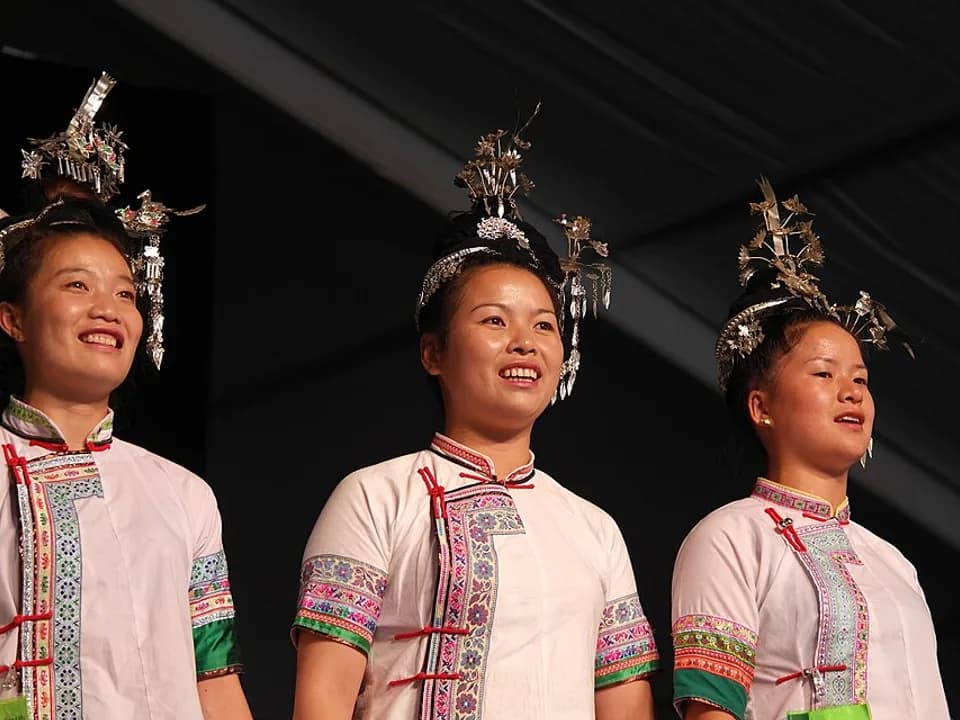
Dong Grand Song
UNESCO lists this leaderless, unaccompanied multipart singing tradition as intangible cultural heritage. Attend a scheduled community or visitor performance respectfully; do not assume every evening or village offers one.
- How to participate
- Ask the current visitor center or accommodation which performance is operating, where it takes place and whether recording is permitted.
- Best time
- A confirmed performance or festival date, checked again on arrival.
- How long
- One evening or a focused one-to-two-hour program.
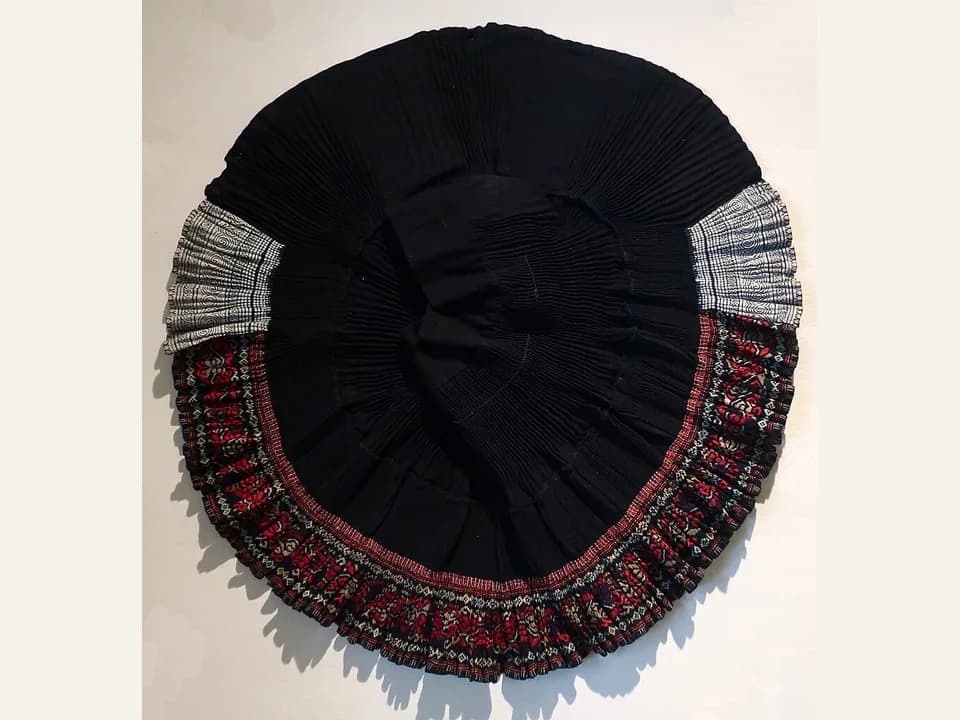
Rongjiang, Xijiang, Songtao and specialist community workshops
Miao embroidery, batik and indigo craft
Embroidery and indigo textile work use patterns and skills specific to each community. Choose a workshop that names its maker and explains the process. Ask permission before photographing people, patterns or work in progress.
- How to participate
- Arrange through a named workshop, museum, visitor center or accommodation rather than expecting a drop-in class in every village.
- Best time
- Year-round when a maker has confirmed availability.
- How long
- One to three hours for a demonstration or introductory workshop.
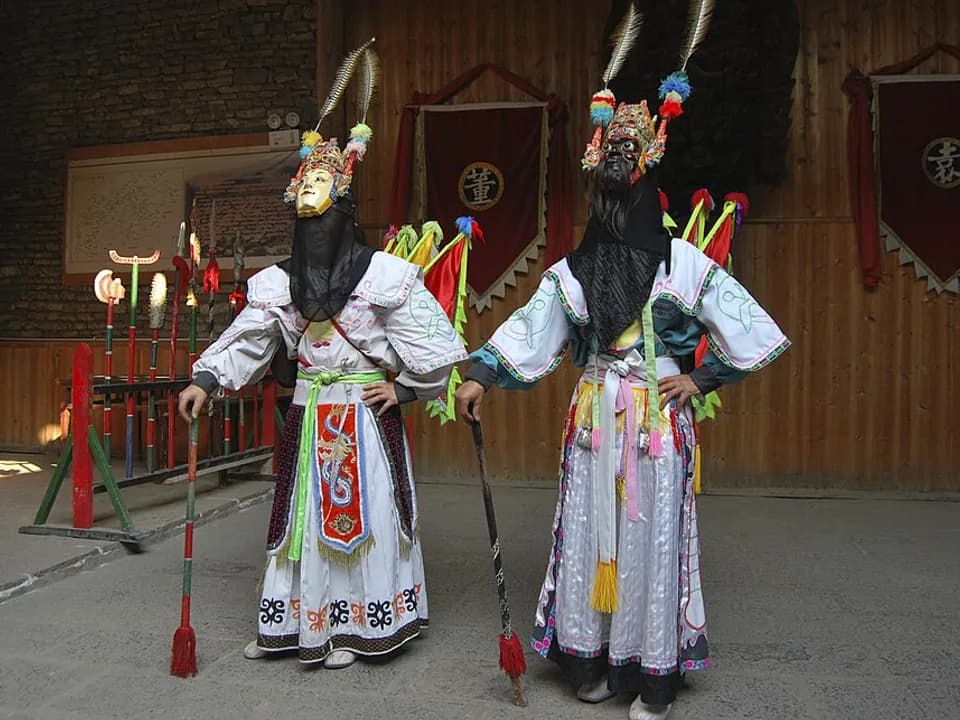
Tianlong, Jiuzhou and other Tunpu communities around Anshun
Tunpu Dixi opera and mask carving
Dixi is a ritualized martial dance-drama with carved wooden masks. Avoid reducing it to the generic “Nuo mask show” label. Attend a scheduled community program and follow local guidance around masks and ritual objects.
- How to participate
- Confirm the village, performance time and any mask workshop through the current local visitor channel before traveling.
- Best time
- Festival periods can offer more activity, but only a current notice can confirm a public performance.
- How long
- Half a day including the village and a confirmed performance or workshop.
Guizhou vs Yunnan vs Guilin
Compare the time and travel each region needs.
Choose according to your available time, the landscapes you want to see and how much transport planning you are comfortable doing.
Guizhou
- Choose it for
- Waterfalls, caves, peak forests and a route connecting Miao, Dong, Bouyei and Tunpu communities.
- Tradeoff
- The mountainous province is spread out. Allow time for local transfers as well as the train journeys.
- Best trip shape
- Five to ten days in one area: the west, southeast, northeast or around Xingyi.
Yunnan
- Choose it for
- A broader mix of old towns, highland landscapes and well-established long-distance travel circuits.
- Tradeoff
- Its famous stops are also far apart, and the classic circuit can feel highly developed and crowded.
- Best trip shape
- A longer multi-base trip where altitude, climate and distance vary substantially.
Guilin & Yangshuo
- Choose it for
- Karst scenery, rivers and cycling within easy reach of an established tourist base.
- Tradeoff
- It is easier to add to a short itinerary, but offers a narrower regional and cultural range than a Guizhou circuit.
- Best trip shape
- Two to four days based around Guilin, Yangshuo and the Li or Yulong river area.
A realistic Guizhou itinerary
Routes for three, five, seven or ten days.
Use these as suggested itineraries. Check train times, attraction access and local transfers for your travel dates before booking.
3 days
Stay near one main attraction
Choose Guiyang and Huangguoshu, Kaili and Xijiang, or Libo alone. Three days gives you time for a short visit to one area; crossing the province would take too much of it.
5 days
Choose west or southeast
Pair Guiyang with Huangguoshu and Zhijin Cave, or go southeast for Xijiang, Zhenyuan and Libo. Do not attempt both branches in five days.
7 days
Connect a few nearby stops
For a first visit, consider Guiyang, Huangguoshu, either Xijiang or Zhenyuan, and then Libo. Spend at least two nights in one base so you are not moving hotels every day.
10 days
Add one more distant area
Extend the seven-day route with either Fanjingshan in the northeast or Xingyi and Wanfenglin in the southwest. Adding both would leave much of the trip for transfers.
Travel without a car
Plan the transfer from the station.
Use high-speed rail for major gateways, then plan a bus, taxi or pre-arranged transfer to the attraction or village. Save the Chinese name of every station, hotel and destination before each leg.
- Book with the exact passport name and document number.
- Check whether the station name refers to the city center or a distant county.
- Keep a screenshot of the destination and hotel phone number offline.
What to eat in Guizhou
Try the local soups, noodles and hotpot.
Regional food is part of the pleasure of visiting Guizhou. Translated menus can leave out ingredients, so ask about offal, fish prices and dietary restrictions before ordering.
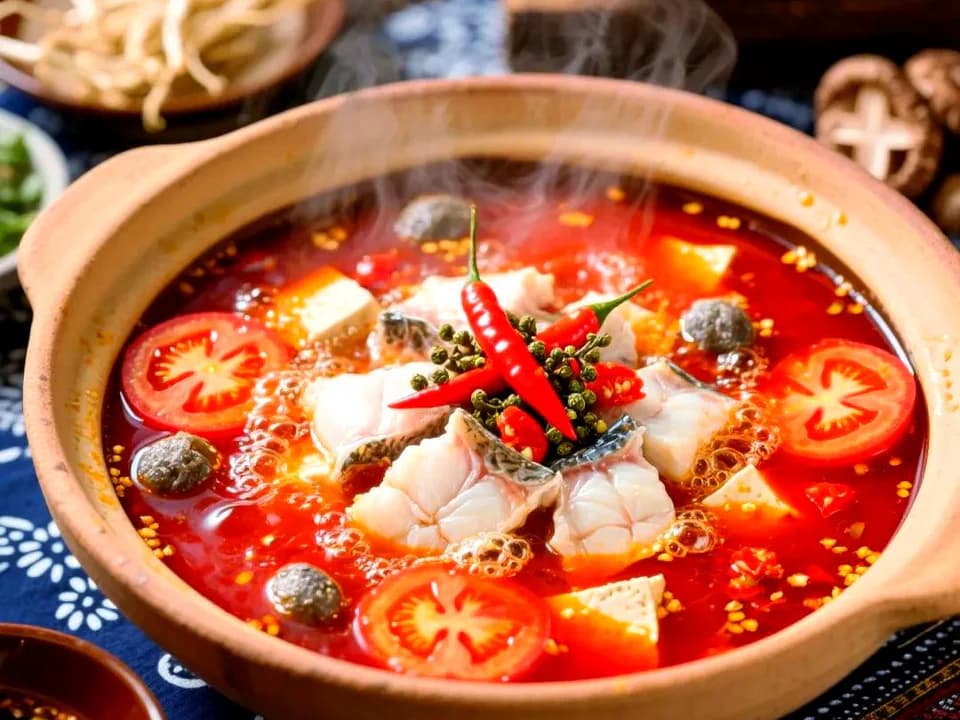
Fish in sour soup
Fish served in a bright, fermented sour broth, a characteristic Guizhou flavor. Ask which fish is used and whether the price is per dish or by weight.
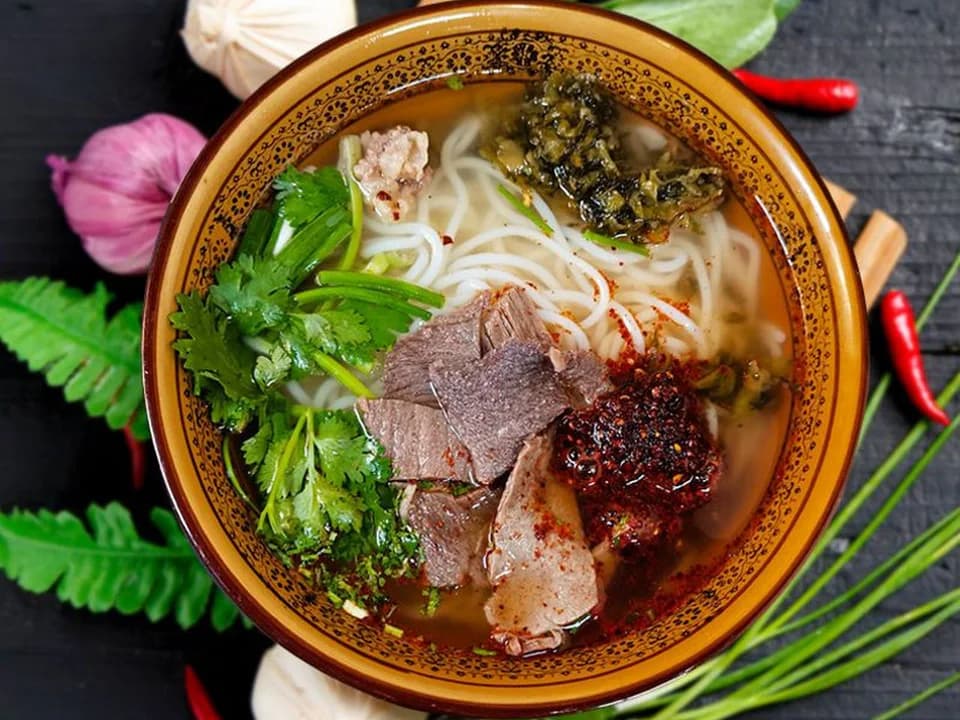
Beef rice noodles
A practical breakfast or quick meal. The broth, chili and toppings vary by shop, so start with the house version before adding more heat.

Changwang noodles
This Guiyang noodle bowl traditionally includes pork intestine and blood curd. If you avoid offal, show a translated dietary card before ordering.
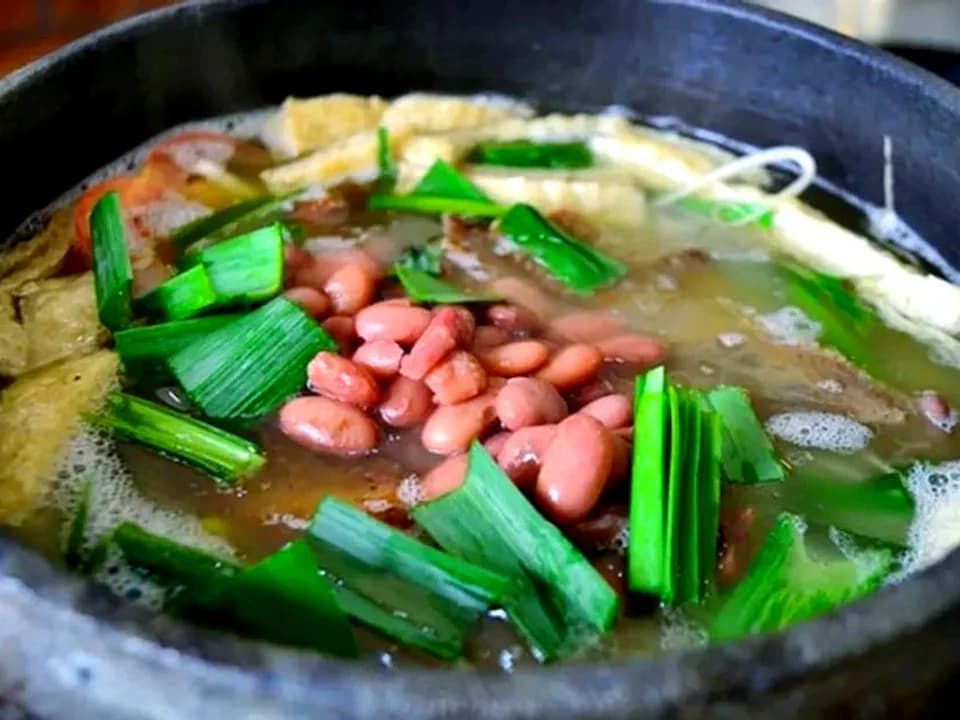
Bean hotpot
A savory bean hotpot found around the province. Chili dips and local herbs can have strong flavors; first-time visitors often have mixed reactions to fish mint.
Food photographs supplied for this page by the Chinista editor.
What can go wrong
Have a backup if the day changes.
Weather, long journeys or booking changes can disrupt a day. Decide which stop you could skip if you run short of time.
Allow time for local transfers
Trains shorten some longer journeys, but you still need transport between stations, attraction entrances and village accommodation. Include those transfers when working out the total travel time.
Keep an alternative for poor weather
Rain can swell waterfalls and hide mountain views in cloud. Have another plan if you are making an expensive detour for a viewpoint.
Reservations and operating details can change
Before each travel day, check the attraction's official information and the current 12306 timetable. These suggested routes do not confirm ticket availability or guarantee admission.
Expect visitor facilities in Xijiang
Xijiang has facilities for large numbers of visitors. Expect a busy tourist destination, follow local rules and respect the people who live there.
Before you leave
Set up your phone, payments and bookings.
Prepare a working phone and a backup way to pay. Check that train bookings match your passport and save directions to your hotel.
Frequently asked questions
Planning a Guizhou trip
Is Guizhou worth visiting on a first trip to China?
Yes, if you enjoy landscapes, regional food and slower overland travel. Give Guizhou most of the trip instead of squeezing it between major cities. With only a week in China, a trip to Beijing, Xi'an or Shanghai may be simpler.
How many days do you need in Guizhou?
Allow three days for one arrival city and a main attraction, or five days for one part of the province. With seven days, you can connect several stops; ten days gives you room to add a more distant area. Trying to visit every place here would mean spending much of the trip on transfers.
Can you travel around Guizhou without a car?
Yes, but not entirely by train. High-speed rail connects useful gateways, then buses, taxis or pre-arranged transfers cover the last leg. Save each station, hotel and attraction name in Chinese before leaving a reliable connection.
When is the best time to visit Guizhou?
Spring and autumn can be mild. Summer is green but wetter and busier; winter is quieter and cooler. Every season has drawbacks, so check the forecast and attraction notices for the places you plan to visit.
Primary and official sources
Research notes
Last reviewed: . Route times, tickets and operating rules still need a live check for your dates.
- Guizhou Provincial Government — recommended travel routes and destinations
- UNESCO World Heritage Centre — Fanjingshan
- Guizhou Provincial Government — Fanjingshan visitor information
- Guizhou Provincial Government — Guiyang–Libo high-speed railway
- Guizhou Provincial Government — Wanfenglin and Malinghe Canyon
- Guizhou Provincial Government — representative Guizhou dishes
- Guizhou Provincial Government — official international tourism portal launch
- Guizhou Provincial Government — Zhaoxing Dong village and Congjiang rail access
- Guizhou Provincial Government — Wumeng Grassland in Panzhou
- Guizhou Provincial Government — Liupanshui seasonal travel
- Guizhou Provincial Government — Zhenyuan Ancient Town
- Guizhou Provincial Government — Zhijin Cave karst deposits
- Guizhou Provincial Government — Rongjiang Village Super League
- Guizhou Provincial Government — Qingyan Ancient Town
- Guizhou Provincial Government — Longgong in Anshun
- Guizhou Provincial Government — Tunpu villages and Dixi culture
- UNESCO Intangible Cultural Heritage — Grand Song of the Dong ethnic group
- UNESCO — Miao embroidery in Songtao, Guizhou
- Wikimedia Commons — Malinghe River Canyon photo by Glabb (CC BY-SA 3.0)
- Wikimedia Commons — Dong singers at the Smithsonian Folklife Festival by S Pakhrin (CC BY 2.0)
- Wikimedia Commons — Miao festival skirt from Huangping, Guizhou by Hiart (CC0 1.0)
- Wikimedia Commons — Tunpu Dixi performers by Yinwang888 (CC BY-SA 4.0)